I am hopelessly attached to some of my students. For some, this school year marks our fourth year in education together. I had them as little seventh graders and now I have them as sophomores with driver's licenses. I have had the opportunity to watch them grow up, whether or not I had them every year as a student.
Today in class I couldn't help but beam with pride as I read some of my students' reflective essays. The prompt was from the annual essay contest for the Oklahoma National Memorial and Museum. Students had to reflect on an occasion when they had to make an unpopular moral choice. I heard stories about saying no to drugs and alcohol. One girl described how she let an adult know about a rape that had happened--even though a friend had sworn her to secrecy. A simple story about turning in a lost wallet--with all its money still in tact--also moved me. And it wasn't just that these were good choices. It was that these were choices being made by my students. I was very, very proud of them.
Also, one of my favorite students told me today that he made a 30 on his ACT. Another reason for me to be proud. (I am definitely attached to him because he is one of two students who I have now had for four years in a row.) My first score on the ACT was also a 30, but that was when I was a junior in high school, but he is only a sophomore. I am excited to see what he does with his life.
Friday, January 9, 2009

Friday, January 2, 2009
A Look Back in Books
In Fall 2005, I began recording every book that I read. I began by recording only the title of the book. A year later I added the genre of the book. Last year I began to include the author, year of publication, and number of pages. Below is my reading history for the year 2008. I have bolded and annotated some of my favorite titles.
SPRING 2008
McCarthy, Cormac. No Country for Old Men. © 2005. 309 pages. Crime.
Alexie, Sherman. The Absolutely True Diary of a Part-Time Indian. © 2007. 230 pages. CRF/Multicultural. (This book is Alexie's first foray into young adult literature. Arnold Spirit leaves his Indian reservation to attend the local all-white high school after he is kicked out from the rez school. Junior is a hilarious narrator of all the troubles he experiences.)
Wallace, Rich. One Good Punch. © 2007. 114 pages. CRF/Sports.
Wiesel, Elie. Night. © 1972, 2006. 115 pages. Memoir.
Bechdel, Allison. Fun Home: A Family Tragicomic. © 2006. 232 pages. Memoir: Graphic Novel.
Quindlen, Anna. Loud and Clear. © 2004. 288 pages. Essays.
Kilmer-Purcell, Josh. I Am Not Myself These Days. © 2006. 305 pages. Memoir.
Marquez, Gabriel Garcia. Memories of my Melancholy Whores. © 2005. 115 pages. Literature.
Giles, Gail. Right Behind You. © 2007. 292 pages. YA Lit: CRF.
Beah, Ishmael. A Long Way Gone: Memoirs of a Boy Soldier. © 2007. 218 pages. Memoir.
McCourt, Frank. Angela’s Ashes. © 1996. 351 pages. Memoir. (Frank McCourt had a horrible life in Ireland. His parents lived in America, but they moved back to their homeland when things got rough. Things were worse in Ireland. Frank has to deal with living in poverty with his family. His father drinks away their money. His mother holds the family together as best she can. And Frank is forced to grow up at an all too early age. Join in his struggles and triumphs.)
DeGeneres, Ellen. My Point…and I do have one. ©1995. 224 pages. Nonfiction/Essays.
Rivera, Tomás. …And the Earth did not Devour Him. © 1992. 69 pages. Mulitcultural Vignettes.
Hamid, Mohsin. The Reluctant Fundamentalist. © 2007. 184 pages. CRF/Suspense.
Malamud, Bernard. The Natural. © 1952. 231 pages. Historical Fiction/Baseball.
Armstrong Kalesh, Mildred. Little Heathens: Hard Time and High Spirits on an Iowa Farm during the Great Depression. © 2007. 292 pages. Memoir. (Millie grew up on a farm during the Great Depression. If you like to learn about American history, why not try this memoir? The book is broken into small chapters, each about a different section of her life on the farm. Very fascinating.)
Cormier, Robert. I Am the Cheese. © 1977. 214 pages. CRF.
Morrison, Toni. The Bluest Eye. © 1970. 164 pages/6 CDs. Literature: African American.
Satrapi, Marjane. The Complete Persepolis. © 2004. 341 pages. Memoir/Graphic novel.
Furey, Leo. The Long Run. © 2004. 374 pages. Historical Fiction.
Kerouac, Jack. On the Road. © 1955. 313 pages. Beat literature.
SUMMER 2008
Rothman, Rodney. Early Bird: a Memoir of Premature Retirement. © 2005. 237 pages. Memoir/Humor. (Rodney was a writer for The Late Show with David Letterman until he began writing for a sitcom on Fox called Undeclared. Then Undeclared got cancelled, and Rodney was without work. His solution? Retire early and move to a village in Florida. Rodney learns the ways of shuffleboard, illegal cats, and bingo. A hilarious romp with senior citizens narrated by a 20 something.)
Picoult, Jodi. Perfect Match. © 2002. 353 pages. Courtroom Drama.
Sedaris, David. When You Are Engulfed in Flames. © 2008. 323 pages. Nonfiction / Humorous Personal Essays.
Gallo, Donald, Ed. Join In: Multiethnic Short Stories. © 1993. 256 pages. YA Lit.
Allen, Janet. Tools for Teaching Content Literacy. © 2004. 32 pages. Nonfiction: Teaching.
Bradley, Alex / Jeremy Jackson. 24 Girls in 7 Days. © 2005. 265 pages. YA Lit: CRF.
McDaniel, Lurlene. Prey. © 2008. 196 pages. YA Lit: CRF.
Kittle, Penny. Write Beside Them. © 2008. 236 pages. Nonfiction: Teaching. (If I had to pick the most important book I read in 2008, this would be it. I read this book for inspiration on how to teach writing differently in my high school English classroom. I came away from this book with great ideas. I learned that I should model an example essay of every essay that I assign my students. This strategy revolutionized the way I teach. I even began an e-mail correspondence with Penny Kittle, who encouraged me and wrote me back.)
Schlosser, Eric. Fast Food Nation. © 2001. 288 pages. Nonfiction: Expose.
Chaucer, Geoffrey. The Canterbury Tales. © 1600s. 100+pages. Literature.
Picoult, Jodi. Salem Falls. © 2001. 434 pages. Courtroom Drama.
Young, William P. The Shack. © 2007. 248 pages. Christian Fiction/Theology.
Pausch, Randy. The Last Lecture. © 2008. 206 pages. Nonfiction: Life Lessons.
Nafisi, Azar. Reading Lolita in Tehran: A Memoir in Books. © 2003. 343 pages. Memoir.
FALL 2008
Zusak, Markus. The Book Thief. © 2005. 550 pages. Historical Fiction / Holocaust Literature. (This is not just another Holocaust book. The narrator is Death. Yes, that's right. Death narrates the story of an orphan named Liesel whose family secretly hides a Jew. A top five book of 2008.)
Pynchon, Thomas. The Crying of Lot 49. only about 50 pages. © 1965. (Sucky) Literature.
Ellis, Bret Easton. Less than Zero. © 1985. 208 pages. (Sucky) Literature.
Henkes, Kevin. Olive’s Ocean. © 2003. 217 pages. YA Lit: CRF.
Nava, Michael. Rag and Bone. © 2001. 289 pages. Mystery.
Shusterman, Neal. Unwind. © 2007. 335 pages. YA Lit: Science Fiction. (What would happen if parents could retroactively abort their children? As in, they're a worthless teenager, so we are going to donate all their parts to people who need them more. Come along for a wild ride with some teens who are being hunted down for their parts.)
Lee, Nelle Harper. To Kill a Mockingbird. © 1963. 384 pages. Literary Excellence: Historical Fiction.
Boyne, John. The Boy in the Striped Pajamas. © 2006. 218 pages. YA Lit: Historical Fiction. (This fable is another Holocast book. Bruno's father is in charge of Auschwitz, but young Bruno has no clue. He does know that he is lonely until he meets a boy of his age at the nearby fence. A very fast read.)
Meyer, Stephenie. Twilight. © 2005. 498 pages. YA Lit: Vampires / Chick Lit.
Crosley, Sloane. I Was Told There’d Be Cake. © 2008. 228 pages. Humorous Essays.
Hosseini, Khaled. The Kite Runner. © 2003. 371 pages. Ethnic Literature. (I added this novel to the sophomore curicculum, thinking that students would actually read it. Boy, was I right. The students had great reactions to this novel, which is set in Afghanistan. Amir grew up living a privileged life in the 1970s, but he holds a dark secret. Years later after 9/11, he journeys back to Afghanistan to right his wrong. Is redemption possible?)
Cleary, Beverly. Ramona the Pest. © 1968. 192 pages. Kid Lit.
Cleary, Beverly. Ramona the Brave. © 1975. 190 pages. Kid Lit.
Cleary, Beverly. Ramona and her Father. © 1975, 1977. 186 pages. Kid Lit.
Cleary, Beverly. Ramona and her Mother. © 1979. 208 pages. Kid Lit.
Cleary, Beverly. Ramona Quimby, Age 8. © 1981. 190 pages. Kid Lit.
Cleary, Beverly. Ramona’s World. © 1999. 192 pages. Kid Lit.
Cleary, Beverly. Ramona Forever. © 1984. 191 pages. Kid Lit.
Asher, Jay. Thirteen Reasons Why. © 2008. 288 pages. YA Lit: Contemporary Realistic Fiction.
Rowling, J.K. The Tales of Beedle the Bard. © 2008. 128 pages. YA Lit: Fantasy short stories.
Kinney, Jeff. Diary of Wimpy Kid: a novel in cartoons. © 2007. 217 pages. YA Lit: CRF.
Hautman, Pete. Sweet-blood. © 2003. 242 pages. YA Lit: CRF/Vampires.
CHRISTMAS BREAK 2008
Alexie, Sherman. The Lone Ranger and Tonto Fistfight in Heaven. © 1993, 2005. 242 pages. Literature: Native American. (I began and ended my year of reading with Sherman Alexie, one of my newest favorite authors. This collection of short stories features a wide cast of Indians on a reservation in the Northwest. The kicker: Alexie wrote almost all of these stories when he was in his twenties.)
Sonnenblick, Jordan. Notes from the Midnight Driver. © 2006. 265 pages. YA Lit: CRF.
Vowell, Sarah. The Wordy Shipmates. © 2008. 248 pages. Nonfiction: American history. (Do the names Roger Williams, Anne Hutchinson, or John Winthrop ring a bell? They were some of the earliest settlers in America, but I never got a detailed look at their lives until I read this book. Their legacy of "helping those less fortunate" is still alive and well in America.)
SPRING 2008
McCarthy, Cormac. No Country for Old Men. © 2005. 309 pages. Crime.
Alexie, Sherman. The Absolutely True Diary of a Part-Time Indian. © 2007. 230 pages. CRF/Multicultural. (This book is Alexie's first foray into young adult literature. Arnold Spirit leaves his Indian reservation to attend the local all-white high school after he is kicked out from the rez school. Junior is a hilarious narrator of all the troubles he experiences.)
Wallace, Rich. One Good Punch. © 2007. 114 pages. CRF/Sports.
Wiesel, Elie. Night. © 1972, 2006. 115 pages. Memoir.
Bechdel, Allison. Fun Home: A Family Tragicomic. © 2006. 232 pages. Memoir: Graphic Novel.
Quindlen, Anna. Loud and Clear. © 2004. 288 pages. Essays.
Kilmer-Purcell, Josh. I Am Not Myself These Days. © 2006. 305 pages. Memoir.
Marquez, Gabriel Garcia. Memories of my Melancholy Whores. © 2005. 115 pages. Literature.
Giles, Gail. Right Behind You. © 2007. 292 pages. YA Lit: CRF.
Beah, Ishmael. A Long Way Gone: Memoirs of a Boy Soldier. © 2007. 218 pages. Memoir.
McCourt, Frank. Angela’s Ashes. © 1996. 351 pages. Memoir. (Frank McCourt had a horrible life in Ireland. His parents lived in America, but they moved back to their homeland when things got rough. Things were worse in Ireland. Frank has to deal with living in poverty with his family. His father drinks away their money. His mother holds the family together as best she can. And Frank is forced to grow up at an all too early age. Join in his struggles and triumphs.)
DeGeneres, Ellen. My Point…and I do have one. ©1995. 224 pages. Nonfiction/Essays.
Rivera, Tomás. …And the Earth did not Devour Him. © 1992. 69 pages. Mulitcultural Vignettes.
Hamid, Mohsin. The Reluctant Fundamentalist. © 2007. 184 pages. CRF/Suspense.
Malamud, Bernard. The Natural. © 1952. 231 pages. Historical Fiction/Baseball.
Armstrong Kalesh, Mildred. Little Heathens: Hard Time and High Spirits on an Iowa Farm during the Great Depression. © 2007. 292 pages. Memoir. (Millie grew up on a farm during the Great Depression. If you like to learn about American history, why not try this memoir? The book is broken into small chapters, each about a different section of her life on the farm. Very fascinating.)
Cormier, Robert. I Am the Cheese. © 1977. 214 pages. CRF.
Morrison, Toni. The Bluest Eye. © 1970. 164 pages/6 CDs. Literature: African American.
Satrapi, Marjane. The Complete Persepolis. © 2004. 341 pages. Memoir/Graphic novel.
Furey, Leo. The Long Run. © 2004. 374 pages. Historical Fiction.
Kerouac, Jack. On the Road. © 1955. 313 pages. Beat literature.
SUMMER 2008
Rothman, Rodney. Early Bird: a Memoir of Premature Retirement. © 2005. 237 pages. Memoir/Humor. (Rodney was a writer for The Late Show with David Letterman until he began writing for a sitcom on Fox called Undeclared. Then Undeclared got cancelled, and Rodney was without work. His solution? Retire early and move to a village in Florida. Rodney learns the ways of shuffleboard, illegal cats, and bingo. A hilarious romp with senior citizens narrated by a 20 something.)
Picoult, Jodi. Perfect Match. © 2002. 353 pages. Courtroom Drama.
Sedaris, David. When You Are Engulfed in Flames. © 2008. 323 pages. Nonfiction / Humorous Personal Essays.
Gallo, Donald, Ed. Join In: Multiethnic Short Stories. © 1993. 256 pages. YA Lit.
Allen, Janet. Tools for Teaching Content Literacy. © 2004. 32 pages. Nonfiction: Teaching.
Bradley, Alex / Jeremy Jackson. 24 Girls in 7 Days. © 2005. 265 pages. YA Lit: CRF.
McDaniel, Lurlene. Prey. © 2008. 196 pages. YA Lit: CRF.
Kittle, Penny. Write Beside Them. © 2008. 236 pages. Nonfiction: Teaching. (If I had to pick the most important book I read in 2008, this would be it. I read this book for inspiration on how to teach writing differently in my high school English classroom. I came away from this book with great ideas. I learned that I should model an example essay of every essay that I assign my students. This strategy revolutionized the way I teach. I even began an e-mail correspondence with Penny Kittle, who encouraged me and wrote me back.)
Schlosser, Eric. Fast Food Nation. © 2001. 288 pages. Nonfiction: Expose.
Chaucer, Geoffrey. The Canterbury Tales. © 1600s. 100+pages. Literature.
Picoult, Jodi. Salem Falls. © 2001. 434 pages. Courtroom Drama.
Young, William P. The Shack. © 2007. 248 pages. Christian Fiction/Theology.
Pausch, Randy. The Last Lecture. © 2008. 206 pages. Nonfiction: Life Lessons.
Nafisi, Azar. Reading Lolita in Tehran: A Memoir in Books. © 2003. 343 pages. Memoir.
FALL 2008
Zusak, Markus. The Book Thief. © 2005. 550 pages. Historical Fiction / Holocaust Literature. (This is not just another Holocaust book. The narrator is Death. Yes, that's right. Death narrates the story of an orphan named Liesel whose family secretly hides a Jew. A top five book of 2008.)
Pynchon, Thomas. The Crying of Lot 49. only about 50 pages. © 1965. (Sucky) Literature.
Ellis, Bret Easton. Less than Zero. © 1985. 208 pages. (Sucky) Literature.
Henkes, Kevin. Olive’s Ocean. © 2003. 217 pages. YA Lit: CRF.
Nava, Michael. Rag and Bone. © 2001. 289 pages. Mystery.
Shusterman, Neal. Unwind. © 2007. 335 pages. YA Lit: Science Fiction. (What would happen if parents could retroactively abort their children? As in, they're a worthless teenager, so we are going to donate all their parts to people who need them more. Come along for a wild ride with some teens who are being hunted down for their parts.)
Lee, Nelle Harper. To Kill a Mockingbird. © 1963. 384 pages. Literary Excellence: Historical Fiction.
Boyne, John. The Boy in the Striped Pajamas. © 2006. 218 pages. YA Lit: Historical Fiction. (This fable is another Holocast book. Bruno's father is in charge of Auschwitz, but young Bruno has no clue. He does know that he is lonely until he meets a boy of his age at the nearby fence. A very fast read.)
Meyer, Stephenie. Twilight. © 2005. 498 pages. YA Lit: Vampires / Chick Lit.
Crosley, Sloane. I Was Told There’d Be Cake. © 2008. 228 pages. Humorous Essays.
Hosseini, Khaled. The Kite Runner. © 2003. 371 pages. Ethnic Literature. (I added this novel to the sophomore curicculum, thinking that students would actually read it. Boy, was I right. The students had great reactions to this novel, which is set in Afghanistan. Amir grew up living a privileged life in the 1970s, but he holds a dark secret. Years later after 9/11, he journeys back to Afghanistan to right his wrong. Is redemption possible?)
Cleary, Beverly. Ramona the Pest. © 1968. 192 pages. Kid Lit.
Cleary, Beverly. Ramona the Brave. © 1975. 190 pages. Kid Lit.
Cleary, Beverly. Ramona and her Father. © 1975, 1977. 186 pages. Kid Lit.
Cleary, Beverly. Ramona and her Mother. © 1979. 208 pages. Kid Lit.
Cleary, Beverly. Ramona Quimby, Age 8. © 1981. 190 pages. Kid Lit.
Cleary, Beverly. Ramona’s World. © 1999. 192 pages. Kid Lit.
Cleary, Beverly. Ramona Forever. © 1984. 191 pages. Kid Lit.
Asher, Jay. Thirteen Reasons Why. © 2008. 288 pages. YA Lit: Contemporary Realistic Fiction.
Rowling, J.K. The Tales of Beedle the Bard. © 2008. 128 pages. YA Lit: Fantasy short stories.
Kinney, Jeff. Diary of Wimpy Kid: a novel in cartoons. © 2007. 217 pages. YA Lit: CRF.
Hautman, Pete. Sweet-blood. © 2003. 242 pages. YA Lit: CRF/Vampires.
CHRISTMAS BREAK 2008
Alexie, Sherman. The Lone Ranger and Tonto Fistfight in Heaven. © 1993, 2005. 242 pages. Literature: Native American. (I began and ended my year of reading with Sherman Alexie, one of my newest favorite authors. This collection of short stories features a wide cast of Indians on a reservation in the Northwest. The kicker: Alexie wrote almost all of these stories when he was in his twenties.)
Sonnenblick, Jordan. Notes from the Midnight Driver. © 2006. 265 pages. YA Lit: CRF.
Vowell, Sarah. The Wordy Shipmates. © 2008. 248 pages. Nonfiction: American history. (Do the names Roger Williams, Anne Hutchinson, or John Winthrop ring a bell? They were some of the earliest settlers in America, but I never got a detailed look at their lives until I read this book. Their legacy of "helping those less fortunate" is still alive and well in America.)
Monday, December 15, 2008
I Wanna Read What I Want
I am convinced that student choice belongs in my classroom. At the college level, no. At the high school level, yes. Is it so terrible that I just want my students to read?
One of my strongest students admitted today that he has not completely read any of the novels from this semester. Of course, I took this comment personally, which is silly. That student probably would not finish a book, even if he were given the choice.
But I gave an online anonymous survey today, and across the board, students agreed that the way to improve my class would be to add more student choice in the books that they read. I find this surprisingly because English teachers rarely do this in high school, yet I gave two "free" reading assignments this semester. And they still want more!
One of my strongest students admitted today that he has not completely read any of the novels from this semester. Of course, I took this comment personally, which is silly. That student probably would not finish a book, even if he were given the choice.
But I gave an online anonymous survey today, and across the board, students agreed that the way to improve my class would be to add more student choice in the books that they read. I find this surprisingly because English teachers rarely do this in high school, yet I gave two "free" reading assignments this semester. And they still want more!
Sunday, November 30, 2008
Ramona

My students' persuasive essays had waited a month, and they were going to be graded over Thanksgiving Break. When I packed everything to take to Mom and Dad's, I also included a box of essays. I didn't start grading until Friday. I set small goals for myself and accomplished a lot. I also needed a reward to bribe myself to keep grading: reading. That's right. I bribed myself with the chance to read a chapter from a hilarious book after I had graded two or three essays. The chapters never lasted long enough. My books of choice? The Ramona Quimby series.
In my last post, I wondered why people would want to re-read a series (or just a book in general), but now I am eating my words! I had so much fun reading the Ramona series. In the span of three days, I read the six books that I owned of the series. Once I finished grading my allotted essays for the day, I feverishly read another Ramona book. I even read part of one while I watched the Bedlam game!
If you aren't familiar with Ramona, let me bring you up to speed. Ramona is a creative, thoughtful, determined, and sometimes defiant little girl who lives with her dad, mom, and all-too-perfect older sister in Oregon. Ramona invariably gets into trouble at home or school and must suffer the consequences. She can't stand it when her friend Howie remains calm because she likes people to be excited. She does not like goody-goodies and demands accuracy from all people.
The series begins when Ramona starts school in kindergarten. Ramona always wants her teachers to like her and has a great amount of respect for them. Perhaps I subconsciously remembered this when I chose to become a teacher. I knew I would have the love and respect of younger people. Ha! Probably not, but it's a funny thought. Anyway, the books blaze by quickly, so you should check one out from your local library.
Tuesday, November 25, 2008
"Required" Novels
Do you like being told what to do? For me, it depends. Most teenagers, though, don't like to be bossed. That's why you have to order them around in nice, creative ways. Ha! :)
I'm thinking about this subject because one of my students in Reading for Fun talked about this today. He said, "I actually like the books that we are required to read in English class. But just knowing that I'm being forced to read a book makes me not want to read it. I know I can still pass the test--even if I don't read it."
"Oh yeah," a female student chimed in. "I made a 100 on The Life of Pi quiz, and I haven't even read it yet."
"And I easily passed the test on The Scarlet Letter," the male student continued.
I found this information to be fascinating. "So you'd rather be reading a book of your own choice?" I asked them. The students agreed with me quickly.
This makes me want to experiment in my English class. What if I tossed out all the "required" novels and simply asked students to read ten books of their own choice in one semester? I could have the students do a creative project with each book to show that they had read it. We could get our literature analysis through short stories that we read in class. There's actually precedence for this. An English teacher from Arkansas wrote about doing this assignment with her students in the most recent issue of English Journal.
What do you think? Do students need to be "forced" to read the classics or "literary" n0vels?
I'm thinking about this subject because one of my students in Reading for Fun talked about this today. He said, "I actually like the books that we are required to read in English class. But just knowing that I'm being forced to read a book makes me not want to read it. I know I can still pass the test--even if I don't read it."
"Oh yeah," a female student chimed in. "I made a 100 on The Life of Pi quiz, and I haven't even read it yet."
"And I easily passed the test on The Scarlet Letter," the male student continued.
I found this information to be fascinating. "So you'd rather be reading a book of your own choice?" I asked them. The students agreed with me quickly.
This makes me want to experiment in my English class. What if I tossed out all the "required" novels and simply asked students to read ten books of their own choice in one semester? I could have the students do a creative project with each book to show that they had read it. We could get our literature analysis through short stories that we read in class. There's actually precedence for this. An English teacher from Arkansas wrote about doing this assignment with her students in the most recent issue of English Journal.
What do you think? Do students need to be "forced" to read the classics or "literary" n0vels?
Saturday, November 22, 2008
Second Time Around
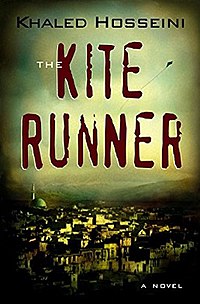
Do you ever make time to reread a book? I hardly do. There are so many good books to read that I feel rereading a book is usually a waste of time. It blows my mind that my high school students sometimes reread the Harry Potter series. I'm all for students reading for fun, so I don't stop them from going back to Hogwarts. But rereading a series indicates to me that a reader is immature. Why not try something new?
All the same, I recently reread The Kite Runner because I was teaching it for the first time to my sophomores. I had read Kite Runner while I was in college, but I could not remember all the details, thus the reread. I added this acclaimed novel to the curriculum this year after I cut out The Natural. I don't like to use pre-made quizzes and tests. I write my own. Plus, I wanted to lead discussion on the novel based on my own reading experience, and not on an online summary.
I know some English teachers do not reread a novel each time that they teach it. They just reuse their notes from the past, which is understandable. Not every teacher has time to reread a book year after year. Nevertheless, I thoroughly enjoyed my second go round with this novel. I picked up on the foreshadowing this time--there was a lot of it--and I understood the characters better. There was even one small part of the plot that my students explained to me during discussion that I had never understood before!
What novel(s) do you like to reread?
Tuesday, November 11, 2008
Twilight
Have you heard of Twilight? It's a teen book series about a girl who falls in love with a vampire. Twilight, the first book in the series, was published in 2005, and now it will release as a movie in about two weeks. There's a lot of buzz about this movie, so I hope that fans are not disappointed.
Except that they all will be in at least one aspect.
You see, the author, Stephenie Meyer, describes the heroic, hunky vampire Edward as so perfect that no human could realistically portray him. This was my biggest beef with the book: Edward's perfection. I got tired of hearing about his alabaster skin, his tight muscles, his copper hair, his amber eyes. Edward's god-like body (Stephenie's words--not mine) was mentioned a lot. Probably 70% of the book is comprised of a description of Edward's body or Bella's reaction (fainting, staring, lusting, etc.) to it. Not much action or suspense going on.
I have other issues with this book as well, but I will not bore you with them. I read Twilight because so many of my students were reading it, and I wanted to see what all the fuss was about. I mean, I jumped on the Harry Potter train, and I was soon thrilled to be riding the Hogwarts Express. However, I am jumping off the Twilight bandwagon. The series, for me, will remain unread.
Twilight rating: 4/10
Except that they all will be in at least one aspect.
You see, the author, Stephenie Meyer, describes the heroic, hunky vampire Edward as so perfect that no human could realistically portray him. This was my biggest beef with the book: Edward's perfection. I got tired of hearing about his alabaster skin, his tight muscles, his copper hair, his amber eyes. Edward's god-like body (Stephenie's words--not mine) was mentioned a lot. Probably 70% of the book is comprised of a description of Edward's body or Bella's reaction (fainting, staring, lusting, etc.) to it. Not much action or suspense going on.
I have other issues with this book as well, but I will not bore you with them. I read Twilight because so many of my students were reading it, and I wanted to see what all the fuss was about. I mean, I jumped on the Harry Potter train, and I was soon thrilled to be riding the Hogwarts Express. However, I am jumping off the Twilight bandwagon. The series, for me, will remain unread.
Twilight rating: 4/10
Subscribe to:
Posts (Atom)
